

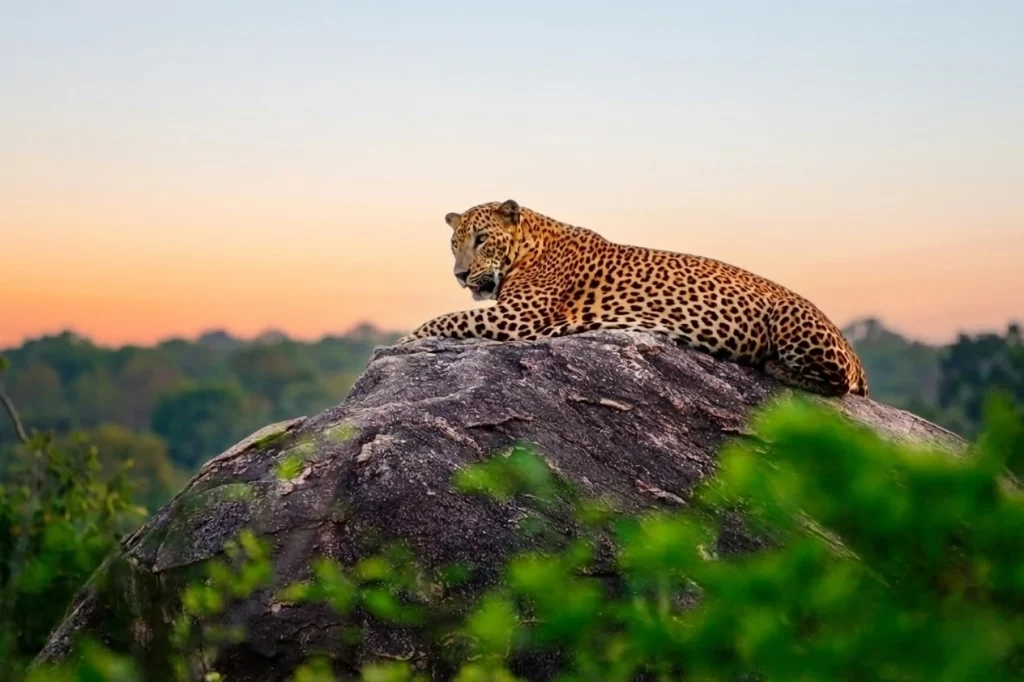
Kumana National Park, located in the southeastern region of Sri Lanka, is one of the country’s most remote and least disturbed wildlife sanctuaries. While the park is world-famous for its birdlife, Kumana also supports a wide variety of wild animals that thrive within its forests, wetlands, grasslands, and water sources. The park’s untouched nature makes it an ideal habitat for elephants, leopards, deer, and many other mammals, offering visitors an authentic and peaceful wildlife experience.
Leopards
 Kumana National Park is widely known for its rich birdlife, but it is also an important sanctuary for one of Sri Lanka’s most remarkable predators the Sri Lankan leopard (Panthera pardus kotiya). Living within the park’s forests, rocky landscapes, wetlands, and coastal areas, these leopards thrive in Kumana’s remote and undisturbed environment.
Unlike some other wildlife parks, Kumana offers a quieter and less crowded habitat, allowing leopards to live and hunt naturally. The park’s diverse ecosystem supports a healthy prey population, making it a suitable territory for these powerful and elusive cats. Although leopard sightings in Kumana are not always guaranteed, their presence highlights the ecological richness and balance of the park.
In recent years, wildlife researchers and conservationists have identified Kumana as an emerging stronghold for Sri Lankan leopards. Ongoing monitoring and conservation projects continue to improve understanding of their behavior, population, and habitat use, helping ensure their protection for future generations.
Unique Leopard Behaviors and Rare Sightings
Leopards in Kumana have displayed rare and remarkable behaviors not commonly observed in other national parks. Occasional reports and documented sightings have revealed leopards moving along coastal beaches, an unusual behavior for the species.
One of the most significant observations includes sightings of a mother leopard with her cubs near the coastline, highlighting the park’s importance as a breeding and nurturing ground. These behaviors suggest that Kumana leopards have adapted uniquely to the park’s diverse ecosystems.
Elephants
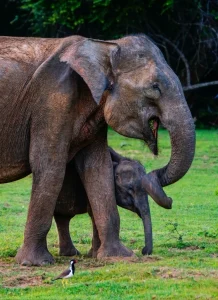 Kumana National Park, located in Sri Lanka’s southeastern dry zone, is one of the country’s most peaceful and untouched wildlife habitats. Among the many species that roam the park, the Sri Lankan elephant (Elephas maximus maximus) stands out as one of the most magnificent and iconic animals. These gentle giants play a crucial role in maintaining the park’s ecological balance while offering visitors unforgettable wildlife encounters.
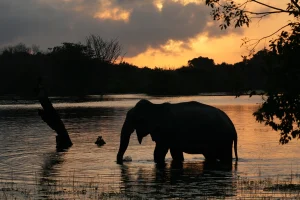
Elephants in Kumana National Park inhabit a variety of landscapes, including mangrove forests, dense jungle areas, open marshlands, and lagoons. These diverse habitats provide the elephants with food, shelter, and access to water throughout the year.
Visitors often observe elephants:
-
Drinking or bathing in waterholes and lagoons
-
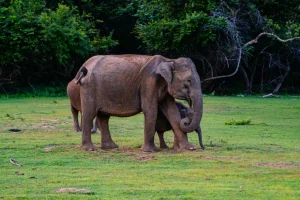
Grazing in open grasslands
-
Crossing dusty safari tracks while moving between feeding and resting areas
Elephants are highly social animals and usually travel in family groups led by a dominant female. Their daily movements are largely influenced by the availability of food and water, especially during the dry season.
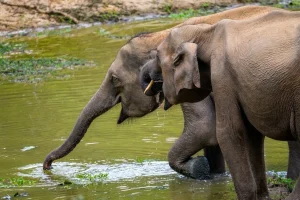 Best Time to See Elephants in Kumana
The best time to observe elephants in Kumana National Park is typically between May and August. During this period, water becomes limited in certain areas, encouraging elephants to gather near reliable water sources. Visitors may witness large herds, sometimes consisting of up to 150 elephants, creating spectacular wildlife viewing opportunities.
Morning and late afternoon safaris often provide the best chances to see elephants when they are most active and moving in search of food and water.
Human–Elephant Conflict and Challenges
Although Kumana is a protected national park, elephants occasionally move beyond park boundaries in search of food and water. This can lead to human–elephant conflict, particularly in surrounding rural areas.
Visitors traveling to Kumana, especially along the road between Panama and the park entrance, may encounter elephants that have become accustomed to human presence. These encounters can be dangerous if proper caution is not taken, as wild elephants can behave unpredictably when they feel threatened.
Safety Guidelines for Visitors
Respecting elephants and maintaining safe viewing practices are essential for both visitor safety and wildlife conservation. Visitors to Kumana National Park are advised to follow these safety precautions:
-
Maintain a safe distance of at least 100–150 meters from elephants
-
Never attempt to feed or approach wild elephants
-
Avoid making loud noises or sudden movements
-
Do not use drones within the park, as they disturb wildlife
-
Always follow the instructions of experienced safari guides
Responsible behavior helps ensure elephants remain wild and undisturbed in their natural habitat.
Deer of Kumana National Park
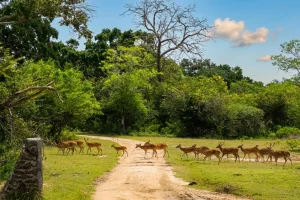 Kumana National Park is one of Sri Lanka’s most ecologically rich and undisturbed wildlife habitats. Among the many mammals that inhabit the park, deer species play a vital role in maintaining the natural balance of the ecosystem. The park provides a safe refuge for several species of deer, particularly the Spotted Deer, Sambar Deer, and the more elusive Hog Deer. These herbivores not only contribute to vegetation control but also serve as an essential food source for predators such as the Sri Lankan leopard.
Major Deer Species Found in Kumana
Spotted Deer (Axis Deer)
The Spotted Deer is called a Tith Muwa in Sinhala and Pulli Man in Tamil. , is the most commonly sighted deer species in Kumana National Park. Recognized by their distinctive white-spotted coats, these graceful animals are often seen grazing in open plains, grasslands, and near water sources.
Spotted deer usually live in herds, which provides them protection from predators. Their alert behavior and sharp senses allow them to detect danger quickly, making them an important part of the park’s predator-prey balance.

Sambar Deer
The Sambar Deer is the largest deer species found in Sri Lanka and is known for its strong build and darker coat. Unlike spotted deer, sambar deer are often found in dense forested areas and thick vegetation, where they prefer to remain hidden from predators.
These deer are usually seen alone or in small groups and are most active during early morning and evening hours. Their presence in forested regions helps maintain vegetation growth and supports ecological diversity within the park.
