


The Kumana Bird Sanctuary is truly an ornithologist’s paradise and one of Sri Lanka’s finest destinations for bird watching. Located on the southeastern coast of the island, about 408 km from Colombo, Kumana forms an important part of the Kumana National Park and is easily accessible via Panama.
Established in 1938, the Kumana Bird Sanctuary is one of the country’s most significant nesting and breeding grounds for birds. Of Sri Lanka’s nearly 400 recorded bird species, around 255 species have been observed in Kumana, highlighting its exceptional biodiversity.
The park covers an area of approximately 35,665 hectares of tropical dry-zone forest, bordered by the Kumbukkan Oya to the west and the coastal stretch leading to Panama in the south. At the heart of the sanctuary lies the famous Kumana Villu, a 200-hectare natural mangrove swamp, supported by numerous tanks and lagoons where thousands of birds gather.
Each year, especially between April and July, large numbers of migratory birds arrive at Kumana Villu to nest and breed, making this period the most rewarding time for bird watching and wildlife photography in the park.
Birds of Kumana National Park


Sri Lanka Junglefowl Indian Peafowl Wooly Necked Stork

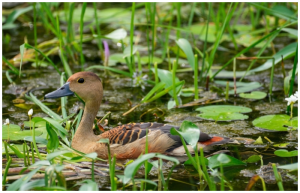

Oriental Dwarf Kingfisher Lesser Whistling Duck Sri Lanka Green Pigeon


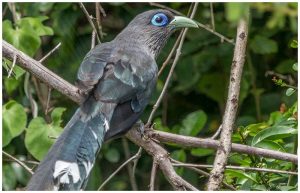
Brown Fish Owl Banded Bay Cuckoo Blue Faced Malkoha


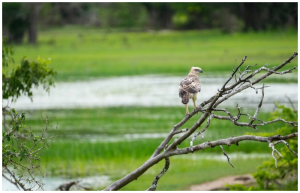
Eurasian Hoopoe Blue-tailed bee-eater Crested Hawk-Eagle


Indian Roller Black-necked Stork Purple Heron
Black-necked Stork
Kumana National Park is one of Sri Lanka’s most important bird sanctuaries, famous for its rich wetlands and breeding colonies of migratory and resident birds. Among the many fascinating species found in the park, the Black-necked Stork (Ephippiorhynchus asiaticus) stands out as one of the rarest and most magnificent birds. Known for its tall stature, striking colors, and limited population, this bird is considered a prized sighting for wildlife enthusiasts and bird watchers visiting Kumana.


Appearance and Identification
 The Black-necked Stork is one of the tallest flying birds found in Sri Lanka. It is easily recognized by its elegant and contrasting color patterns. The bird has a glossy, iridescent black head and neck that shines with shades of green and blue under sunlight. Its body is mostly white, creating a dramatic contrast with its dark upper parts.
One of its most noticeable features is its long, bright red legs, which allow it to walk gracefully through shallow water. The bird also has a strong, long black bill that it uses to catch prey efficiently. Adult birds can grow up to nearly 1.5 meters in height, making them an impressive sight within the wetlands of Kumana.
Habitat in Kumana National Park
Kumana National Park provides an ideal environment for the Black-necked Stork due to its extensive wetland system. The park is home to numerous lagoons, swamps, and seasonal water bodies locally known as “villus.” Among them, Kumana Villu is particularly important as it supports large numbers of water birds throughout the year.
These wetlands offer abundant food sources such as fish, frogs, small reptiles, and aquatic insects. The calm and undisturbed surroundings also provide safe nesting areas for rare species. Because the Black-necked Stork prefers quiet freshwater and marsh habitats, Kumana remains one of the few places in Sri Lanka where it can survive and breed.
Feeding Behaviour
The Black-necked Stork is a skilled hunter that mainly feeds in shallow waters. It slowly walks through wetlands while carefully scanning the water surface for prey. Using its powerful bill, the bird quickly captures fish, amphibians, crustaceans, and occasionally small reptiles.
Unlike many other water birds that feed in flocks, the Black-necked Stork is usually seen alone or in pairs. This solitary feeding behaviour adds to the challenge and excitement of spotting this rare bird during safaris in Kumana National Park.